FAQ
What do consultants ask about invoice templates?
Clear answers on consulting invoice templates, retainers, scope changes, expenses, and getting an invoice through a client's accounts payable process.
What should be included on a consulting invoice?
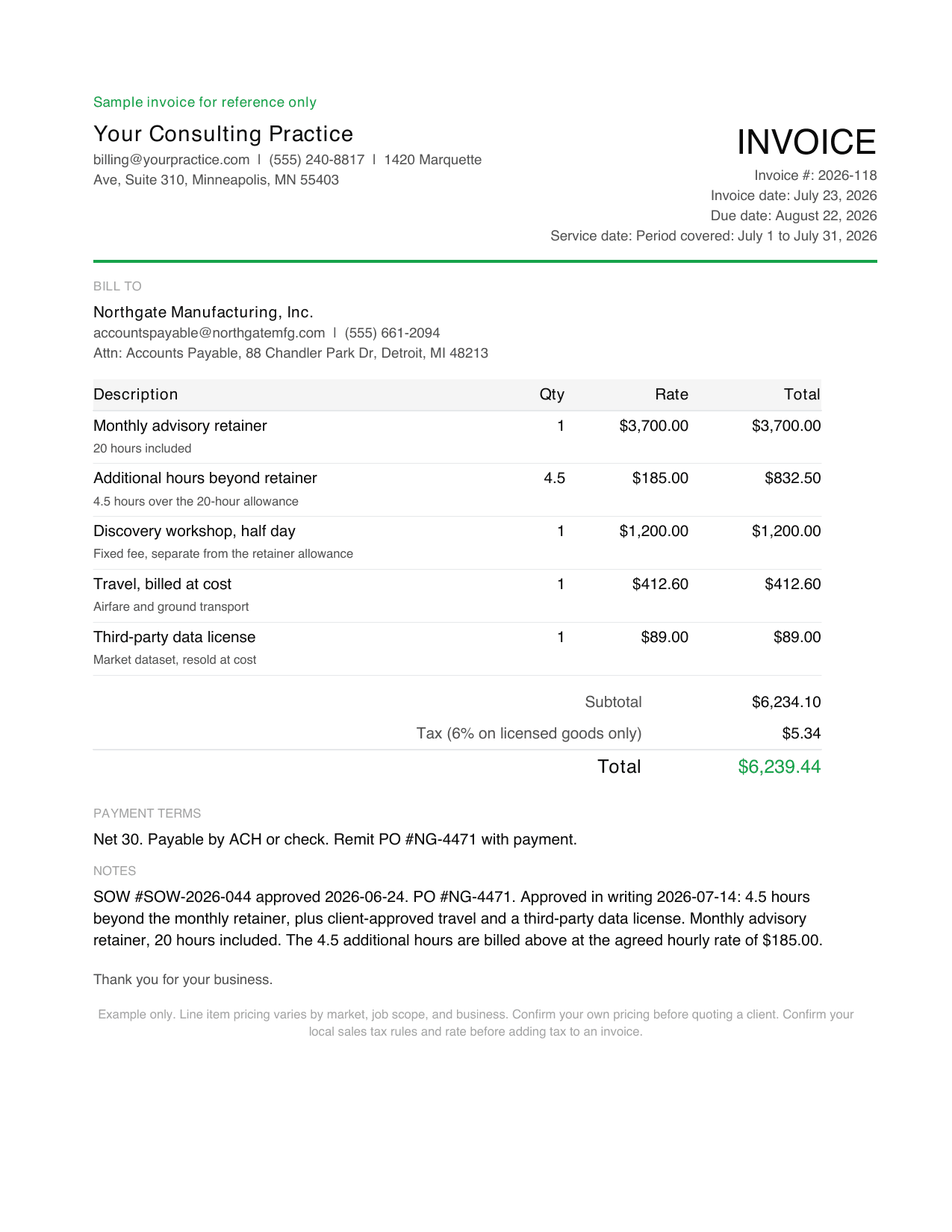
A consulting invoice template should include your practice name and contact, the client's legal entity name and accounts payable contact, a unique invoice number, the period covered, the SOW and purchase order reference, itemized services with rate and total, any retainer overage on its own line, pass-through expenses, tax where it applies, the total due, and payment terms. The same structure applies whether you searched for a consulting invoice template or a consultant invoice template. The purchase order reference matters more than most consultants expect, because accounts payable pays against approved commitments.
How do you invoice for a retainer?
Invoice the retainer as a single line for the period, then show the drawdown separately: opening balance, hours drawn, balance remaining, and any overage billed at the agreed rate. If the client used more than the retainer covers, the overage belongs on its own line with the date they approved it, not folded into the retainer amount.
Should a consultant bill hourly or per project?
Both are common. In the Consulting Success study of nearly 1,000 consultants, 30 percent billed project-based, 29 percent hourly, 16 percent on monthly retainer, 15 percent value-based, and 10 percent on a day rate. Hourly is simpler to invoice and easier for a client to question line by line. Project and milestone billing ties payment to accepted deliverables instead of time.
How do you bill a client for work outside the agreed scope?
Decide before doing the work, not when you invoice. Ask whether the request is inside the SOW, get written approval if it is not, then bill it on its own line with the approval date in the description. Scope decided after delivery turns into a discount negotiation.
How do you invoice reimbursable expenses?
Put each expense category on its own line, bill at cost with receipts attached, and state any markup in the SOW before invoicing it. Watch the tax treatment: your service lines are usually untaxed, but a resold good or software license often is taxable, so show the taxable base separately.
Do consultants charge sales tax on consulting services?
In most US states professional consulting services are not subject to sales tax, but the rules vary by state, by service type, and by what you are actually selling. Resold goods, data, and software licenses are frequently taxable even when the advice around them is not. Confirm your local rules and show the tax rate and taxable base as a separate line.
Why do consulting invoices take longer to get paid than other invoices?
Because the payer is a company with an approval process rather than an individual. The invoice has to match a vendor record, reference an approved commitment such as a purchase order, and reach accounts payable rather than only your project sponsor. Net 30 or net 45 terms are normal. Getting the vendor setup and purchase order right before the first invoice removes most of the delay.
How do you invoice a deposit for a consulting engagement?
Invoice the deposit on its own before the work starts, describing it as a deposit against the engagement rather than as a payment for delivered work. On the final invoice, list the full value of the work and then credit the deposit as a separate negative line so the client can see the whole engagement and the balance due in one document. Deposits of 25 to 50 percent are common for project work, but the figure belongs in your engagement letter rather than being introduced at invoice time.
What should you do if a consulting invoice goes unpaid past its terms?
Check that the invoice actually reached accounts payable and matched a purchase order before assuming the client is refusing to pay. Most late consulting invoices are stuck on a missing purchase order, a vendor record mismatch, or an invoice that only ever went to the project sponsor. If one line is genuinely disputed, invoice the undisputed balance so the rest can be paid while you resolve the disagreement, and point back to the written approval for anything added after the SOW.
What is the difference between a consulting invoice and a consulting proposal?
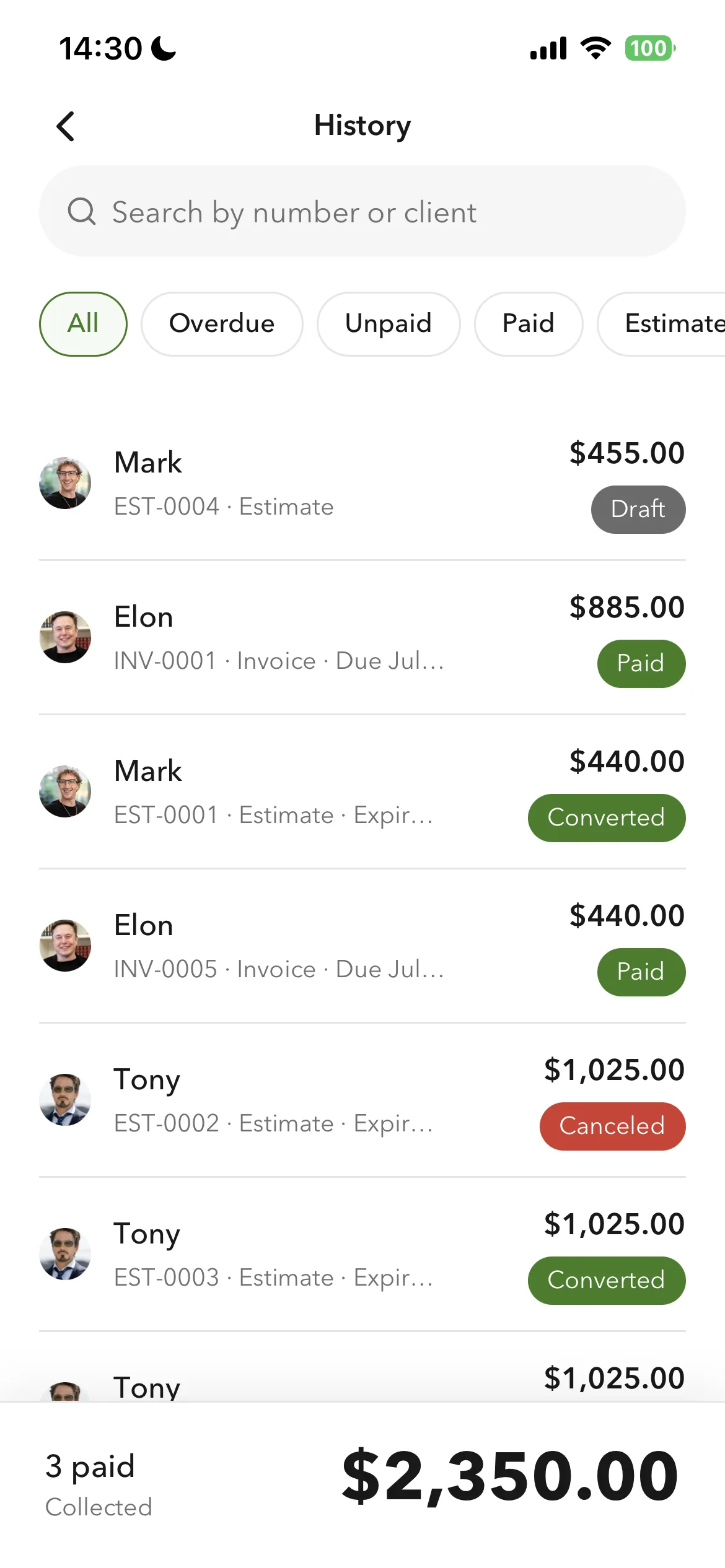
A proposal or statement of work describes what you will do and what it will cost, and it is issued before the client commits. An invoice is issued after some or all of that work is delivered and requests payment for it. The invoice should reference the approved SOW so the client can match what they are being billed for against what they approved. In Billgami you can build the estimate first and convert it into an invoice once the client signs off.
Can Billgami track my consulting hours or manage a retainer?
No. Billgami does not track time and has no retainer feature. It produces the invoice document from hours you have already recorded in whatever tool you use, and it saves your client and your reusable line items so the next invoice starts from them instead of a blank page. If you need automated time tracking or retainer management, use a dedicated tool for that alongside it.
Is Billgami full accounting software?
No. Billgami is for invoices, estimates, quotes, receipts, PDF records, and manual status tracking. It is not tax, payroll, bookkeeping, or payment processing software.
Can I send PDFs from my iPhone?
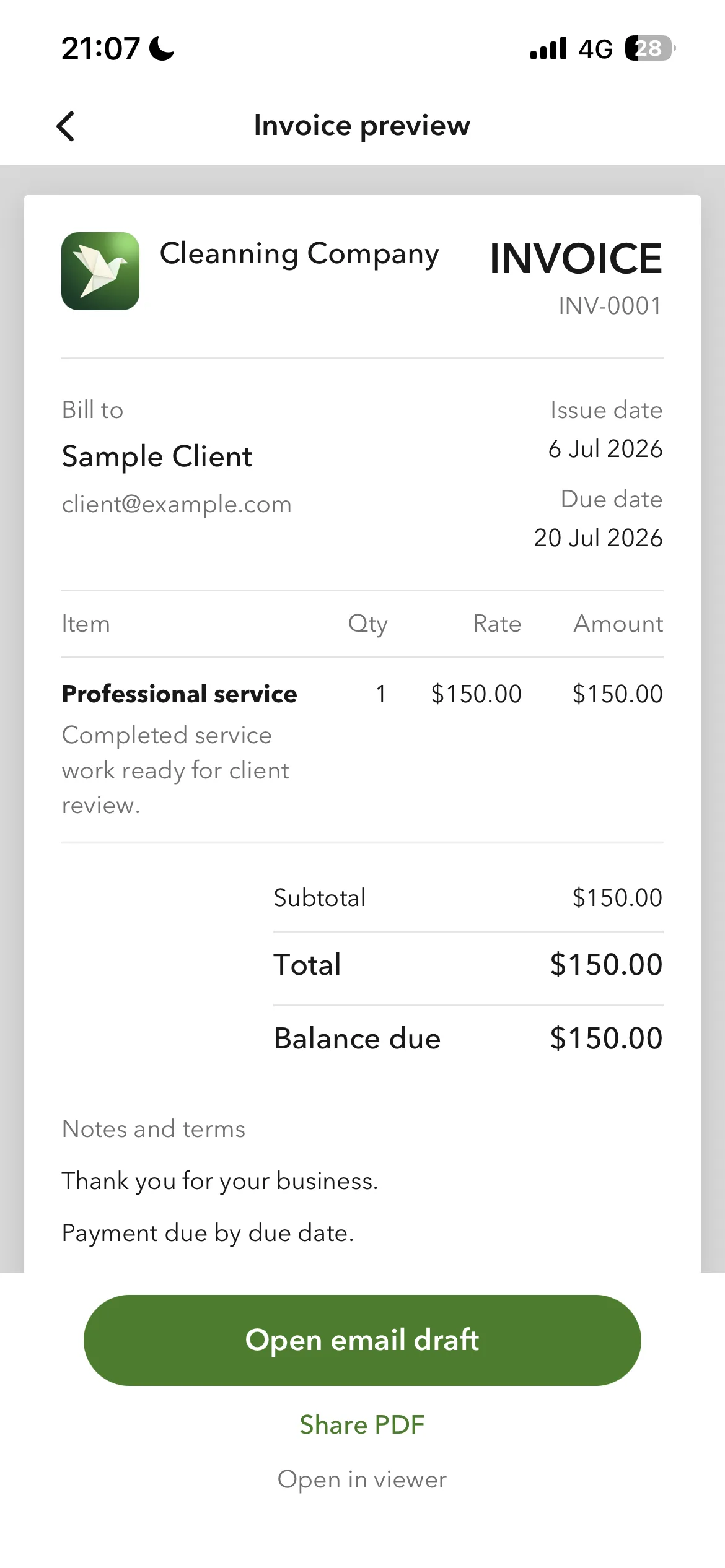
Yes. Billgami is built around creating professional PDFs and sharing them through the iPhone share sheet or email workflows you already use.